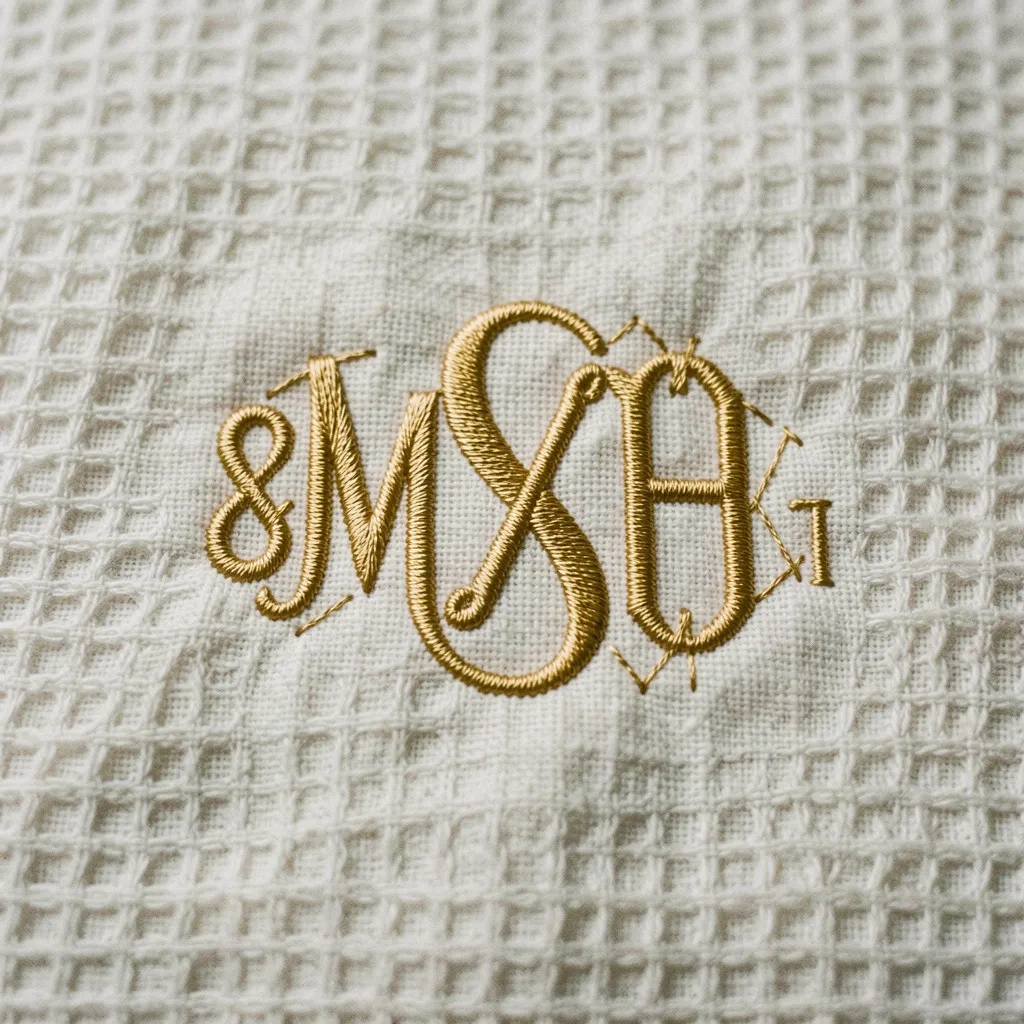
Font Style Categories
Traditional Crests
Traditional crest-style monograms feature ornate serif letterforms with decorative elements. These designs draw inspiration from classical typography and heraldic traditions, offering a timeless, formal appearance.
Modern Script
Modern script monograms use flowing, connected letterforms that create elegant, cursive designs. This style balances tradition with contemporary refinement, suitable for various applications.
Cyber-Minimalism
Cyber-minimalist monograms feature clean, geometric letterforms with reduced ornamentation. This contemporary style emphasizes clarity and simplicity, reflecting modern design sensibilities.
Decorative Serif
Decorative serif monograms combine classic serif letterforms with subtle decorative elements. This style offers a balance between traditional elegance and contemporary appeal.
Historical Context
Origins of Monogramming
Monogramming has been used for centuries to identify personal belongings and signify ownership. The practice evolved from simple marks to elaborate designs that reflect individual identity.
Evolution of Styles
Monogram styles have evolved alongside typography and design trends. From ornate historical designs to minimalist contemporary forms, each era has contributed to the diversity of available styles.
Personal Expression
Today, monogramming serves as a form of personal expression. The choice of font style, size, and placement allows individuals to create designs that reflect their preferences and aesthetic sensibilities.
Choosing Your Style
Consider your personal aesthetic, the intended application, and the overall design context when selecting a monogram style. Each font family conveys different characteristics and works well in specific settings.